We value your privacy
We use cookies to enhance your browsing experience, analyze site traffic, and personalize content. By clicking "Accept All", you consent to our use of cookies.
Family Bonding
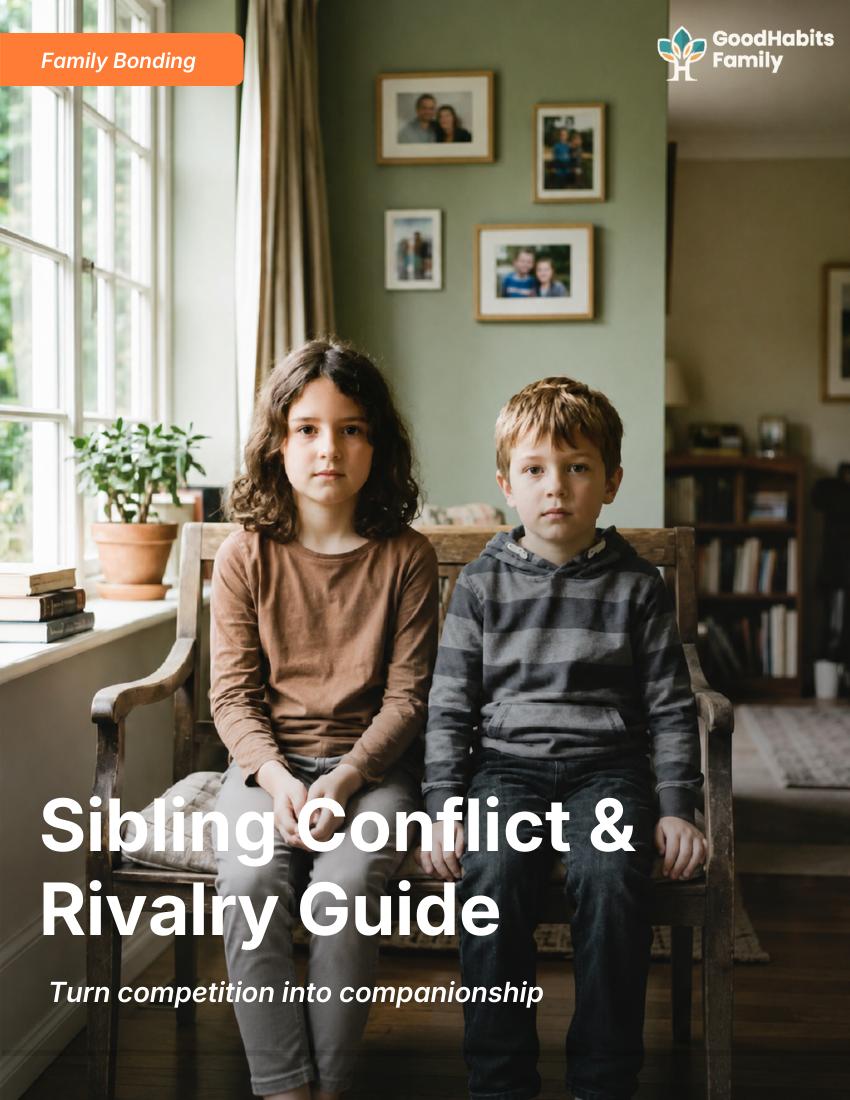
Sibling Conflict & Rivalry Guide
The fights over toys, fairness, and who-got-more. The big-kid-little-kid mismatch. A real-house playbook for raising siblings who actually like each other.
One-time purchase · Lifetime access · No subscription
At a glance
Ages 3–12
Printable PDF + digital reference
22 pages
Instant download after checkout
Use the referee script tomorrow
Lifetime access · re-download anytime
A challenge we hear all the time
Refereeing siblings is its own full-time job.
You're not failing — you're mediating two developing humans with intense feelings, conflicting needs, and a shared bathroom.
"It's not fair!" — the rallying cry of every car ride
A toy fight that escalates to tears, slammed doors, and your raised voice
The older one bossing the younger one; the younger one provoking on purpose
You overhear words between them that genuinely worry you
You catch yourself favoring one child and feeling terrible about it
Your kids fight more at home than at school — and you're absorbing all of it
What could change
Imagine fights that resolve themselves.
Siblings still fight — that's part of growing up together — but the fights are shorter, less physical, and increasingly resolved between them. You're a coach, not a courtroom. The relationship between them strengthens in ways that will outlast their childhood.
Your kids start using the conflict scripts on each other, unprompted
You step out of 60% of the disputes and the world doesn't end
The home volume drops noticeably within 3–4 weeks
You stop feeling like a referee and start feeling like a parent
What you'll get
Everything inside the toolkit
The Sibling Conflict Map
A diagnostic that identifies which of 6 conflict types your kids are stuck in.
Why it mattersYou stop treating every fight the same and start treating each by its actual pattern.
The Coach-Not-Judge Script
A 5-line framework for stepping out of disputes without abandoning the kids.
Why it mattersYou stop being the referee they're both arguing to.
Fairness Reframe Cards
6 fridge-sized cards on the difference between fair and equal — for parents and kids.
Why it mattersEnds the "it's not fair!" loop because the family redefines the word.
The Big-Kid/Little-Kid Toolkit
A 4-page guide to the asymmetric sibling dynamic.
Why it mattersThe age gap stops being a constant friction and becomes a workable structure.
Physical Conflict Protocols
Step-by-step responses for hitting, hair-pulling, and the actual fights.
Why it mattersYou respond to escalation without escalating yourself.
Connection-Between-Siblings Rituals
8 small rituals that build affection between kids over time.
Why it mattersYou're not just managing the fights — you're slowly building the bond.
After you buy
What happens next
From checkout to using it tonight, in three simple steps.
Run the Conflict Map
Spend 10 minutes diagnosing your kids' fight pattern. Most families discover they've been managing the wrong type of conflict the whole time.
Memorize the Coach-Not-Judge script
It's 5 lines. Practice it three times in front of a mirror. The first real-world try is awkward; the third is a habit.
Install one connection ritual
Even one tiny weekly ritual between siblings is enough to start. The Friday-night movie pick rotation is the easiest entry point.
See inside
A look at every page
Click any preview to open the fullscreen viewer.
Research-backed
Because most parents are working the wrong end of the fight.
The instinct is to swoop in and adjudicate. The kid who feels wronged learns to escalate next time, because escalation worked. The kid who lost the argument learns to argue louder. The pattern grows.
This guide flips the dynamic. The parent's role isn't to decide who was right — it's to teach the kids to solve the dispute themselves, with scaffolding that gets progressively lighter. The script library is the scaffolding. Real change comes from withdrawal of the judge role, paired with positive sibling rituals on the other end.
You don't get siblings who never fight. You get siblings who fight less, recover faster, and stay close anyway.
Coach the conflict, don't judge it
The Coach-Not-Judge script is the most-referenced page in the guide for a reason.
Fix the asymmetry separately
Big-kid/little-kid frictions need different tools from peer-conflict tools.
Build positive deposits in parallel
You can't shrink the fights without growing the bond. Both happen at once.
Is this right for you?
Perfect for…
Best for parents of children ages 3 to 12
- Sibling conflict is the #1 source of household stress
- You're refereeing the same fights on a daily loop
- You worry one child is being singled out (by you or by their sibling)
- The age gap is creating ongoing friction
- You want them to like each other in 20 years
This is NOT for families seeking strict-discipline or compliance-based approaches to sibling fights. Our framework is connection-led and teaches kids to resolve conflicts themselves.
About us
Built by parents, for parents.
GoodHabits Family makes printable, research-backed parenting tools for the moments that matter most — not the moments you have time to read a book about. Every toolkit is tested with our community of 10,000+ families before it ships, and refined until it's calm enough to land on your fridge.
Read our full storyFAQ
Questions parents ask before they buy.
My kids are 9 and 4. Is the gap too big for this?
No — the Big-Kid/Little-Kid Toolkit is built specifically for gaps of 4+ years. The asymmetric dynamic needs its own tools, which this guide provides.
When should I step in for a physical fight?
Always, immediately, but in a specific way — pages 16–18 cover this. Short version: end the physical contact first, process emotions second, problem-solve last. Most parents reverse this order.
What about jealousy when a new baby arrives?
There's a 3-page section on new-sibling jealousy. The toolkit isn't a baby-prep manual, but the jealousy frameworks apply directly.
My kids are twins. Will this still work?
Yes — twin-specific notes are scattered through the materials. The competition dynamic is more intense; the tools are the same.
One of my kids is neurodivergent. Does this still apply?
The principles apply; you may need to slow the pace and pair with whatever specialist support your child has. Conflict scripts work; they just need more reps for some kids.
How do I avoid being seen as favoring one kid?
The "fair vs equal" cards address this directly. The honest truth: equal treatment is impossible and not actually what kids need. Customized treatment is. The cards reframe this beautifully for everyone.
How long until I see change?
Most families report fewer fights within 3 weeks, and a noticeably warmer sibling relationship within 6–8 weeks.
What is your policy on digital products?
Due to the nature of digital downloads, all sales are final. If you experience any technical issues accessing your files, please contact our support team and we will ensure you receive the correct downloads.
Continue your journey
Pairs naturally with this

Where this leads
Sibling work is half conflict, half connection.
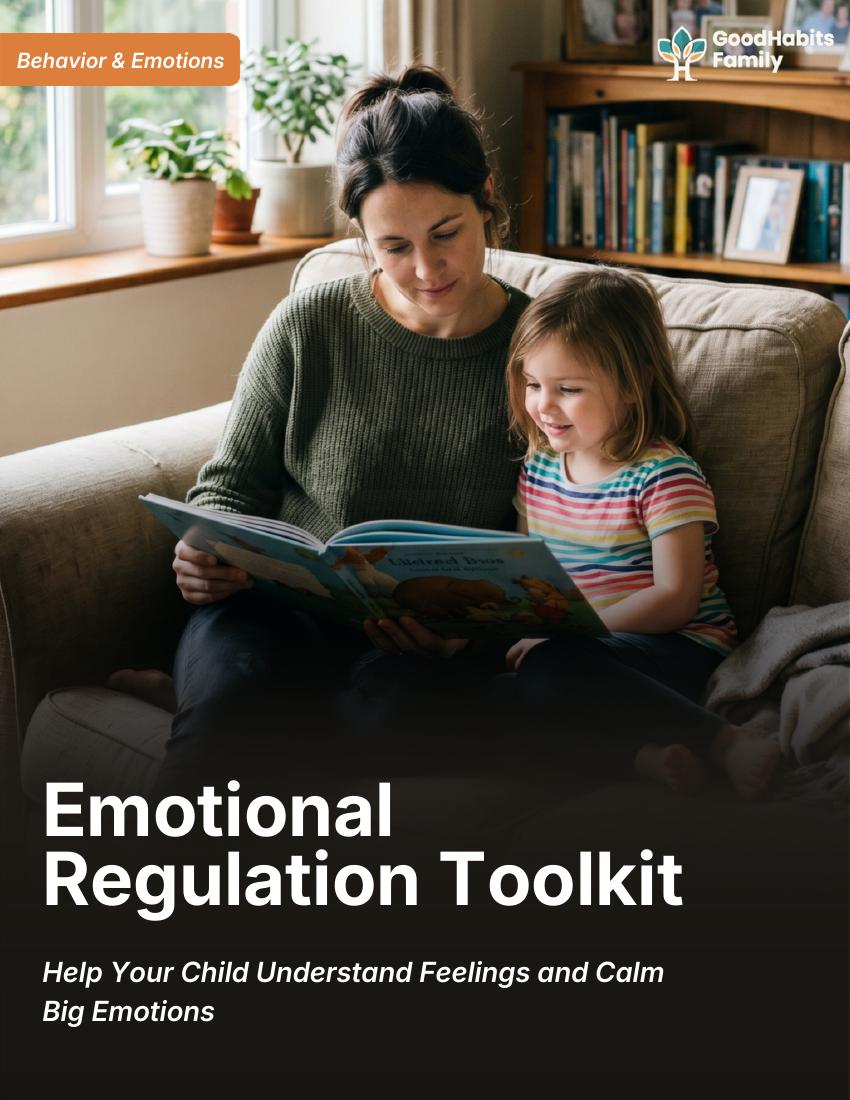
This guide handles the conflict side. The Family Connection Toolkit handles the relational side — the small ongoing deposits that make siblings actually like each other. Pair them, and the household volume drops faster than either does alone.
Bundle price $49.99 · individual price $51.96 · save $1.97 plus a coordinated sibling+connection system
Stay in the loop
One thoughtful email a week.
Practical scripts, calm-down routines, and parenting reframes you can actually use. Unsubscribe any time.
Grab the Free Starter Guide