We value your privacy
We use cookies to enhance your browsing experience, analyze site traffic, and personalize content. By clicking "Accept All", you consent to our use of cookies.
Child Development
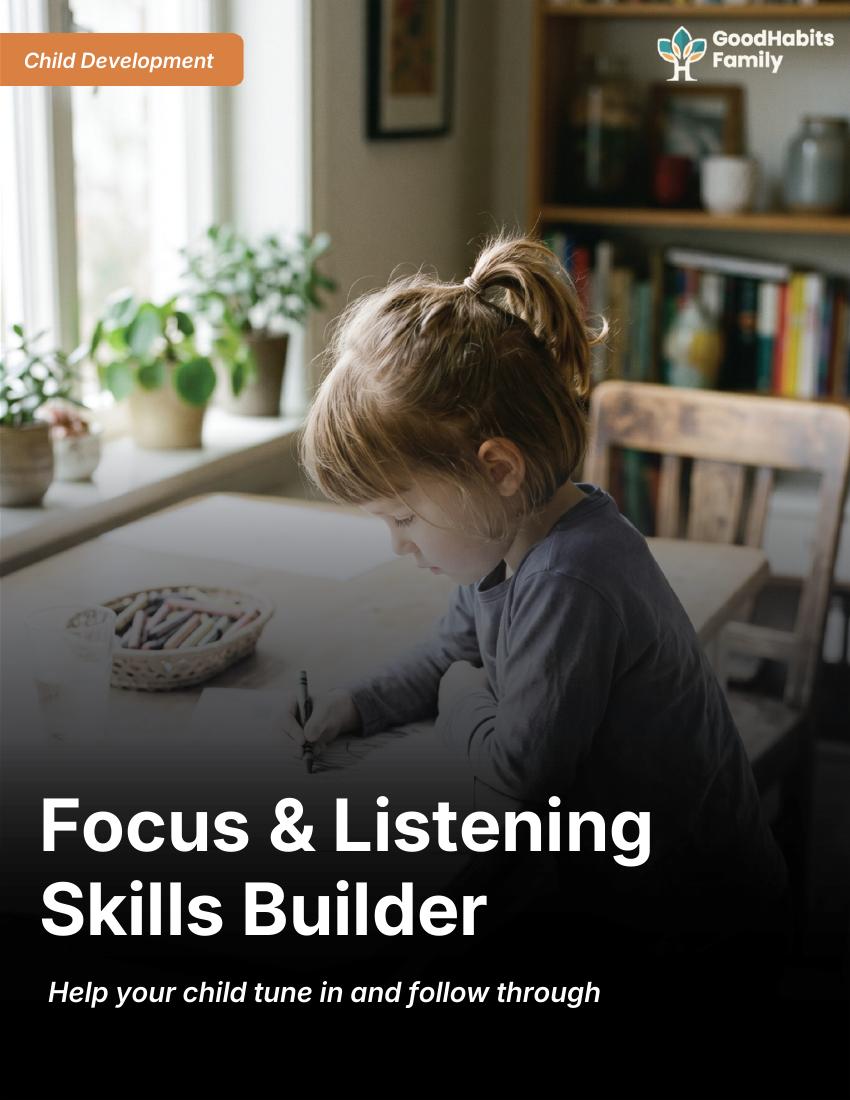
Focus & Listening Skills Builder
The "did you even hear me?" moments. The homework that never gets finished. The mind that's always somewhere else. A parent-tested guide for the child who can't seem to tune in — and follow through.
One-time purchase · Lifetime access · No subscription
At a glance
Ages 5–12
Printable PDF + digital reference
18 pages
Instant download after checkout
Build the Focus Profile in one sitting
Lifetime access · re-download anytime
A challenge we hear all the time
They can focus — for two minutes.
Focus and listening aren't about willpower or discipline. They're about the right environment, the right cues, and the right small wins — and every child's "right" is different.
You said something three times. They still didn't register.
Homework that should take 15 minutes takes 90 — mostly in avoidance
A brain that lights up for one activity and totally checks out for another
Teachers report "great when engaged, difficult otherwise"
You've tried timers, sticker charts, and reward systems that fizzle in a week
You're not sure if this is normal, ADHD, or something else — and you need practical tools while you figure it out
What could change
Imagine a child who tunes in and follows through.
A child who hears you the first time. Who starts a task and sees it through. Who has a "focus profile" they and their teachers can rely on — sensory supports, movement built-in, the right kind of quiet. Not a rebuilt personality — just a real environment for their real brain.
"Did you hear me?" drops from 8 times a day to 1 or 2
Homework becomes half the length because avoidance stops eating it
Teachers report follow-through in the first month of school
You stop wondering if you're missing something — you have a plan
Your child starts using their focus tools on themselves, unprompted
What you'll get
Everything inside the toolkit
My Child Focus Profile
A one-page diagnostic that maps how your child's attention actually works.
Why it mattersYou stop parenting a "generic distracted kid" and start parenting THIS kid.
Environmental Support Menu
The Background Sound / Movement / Snack First / Visual Timer framework — pick the two that fit your child.
Why it mattersSmall environment shifts do more for focus than any lecture ever will.
The Listening-Loop Scripts
6 fridge-sized scripts to end the "did you hear me?" loop without repeating yourself six times.
Why it mattersKids follow through on scripts that don't feel like nagging.
The Homework Off-Ramp
A 3-page plan for turning the daily homework battle into a 25-minute predictable window.
Why it mattersYou reclaim the after-school hours without turning into the homework police.
Praise Accurate Listening
A parent-language guide that names good listening moment-by-moment.
Why it mattersWhat gets noticed grows. This makes the noticing intentional.
When to Ask for More Help
A 2-page honest guide on what's developmentally normal vs. what may warrant a professional evaluation.
Why it mattersClarity, not panic. And a path if you need one.
After you buy
What happens next
From checkout to using it tonight, in three simple steps.
Build the Focus Profile this weekend
It takes 15 minutes. Do it with your child if they're 8+, or observe if they're younger. Every subsequent tool refers back to it.
Pick two environmental supports
Not six. Two. The most common winning pair is Movement + Visual Timer, but the profile tells you which to try.
Rehearse the Listening-Loop scripts
Say them aloud once when your child is calm. Then use one in real life this week. Watch what changes in the second week.
See inside
A look at every page
Click any preview to open the fullscreen viewer.
Research-backed
Because focus is a system, not a personality trait.
The parenting internet is full of advice about "getting your kid to focus" — most of it treats attention as a discipline problem. It isn't. It's a systems problem. The right sensory environment, the right cues, the right small rewards for accurate listening — and most kids can focus far longer than they're currently focusing.
This guide is built around one insight: every child's focus profile is different. Some need background sound; others need silence. Some need movement while they work; others need to sit. Some listen better after a snack; others get sluggish with food. The My Child Focus Profile identifies your child's combination, and the rest of the toolkit is the system built on top.
It's not a replacement for professional evaluation if you're worried about ADHD or a learning difference. It's the practical daily toolkit either way — and it's often enough to solve the focus struggle without any diagnosis at all.
Profile first, tools second
The wrong tool for the wrong brain doesn't work. Profile then prescribe.
Environment beats willpower
The right room, sound, and pacing does more than the best pep talk.
Praise the try, not the outcome
"Praise accurate listening" — the phrase we quote — is the fastest way to grow attention.
Is this right for you?
Perfect for…
Best for parents of children ages 5 to 12
- Your child seems to focus for two minutes then check out
- Homework has become the worst hour of the day
- Teachers describe your child as "capable when engaged"
- You've tried reward charts and they fizzled
- You want practical tools while you decide whether to seek an evaluation
This is NOT a clinical treatment for ADHD or a learning difference. If your child has been diagnosed, pair this with your specialist — it works well alongside professional support, not instead of it.
About us
Built by parents, for parents.
GoodHabits Family makes printable, research-backed parenting tools for the moments that matter most — not the moments you have time to read a book about. Every toolkit is tested with our community of 10,000+ families before it ships, and refined until it's calm enough to land on your fridge.
Read our full storyFAQ
Questions parents ask before they buy.
Is this a substitute for an ADHD evaluation?
No — and it's not trying to be. This toolkit gives you daily-life tools that work regardless of diagnosis. If focus is a significant concern, we recommend a pediatric evaluation in parallel.
My child is 4. Is this too old for them?
The Focus Profile works from age 4, but many of the scripts and homework tools are more useful from age 5. If your 4-year-old is really struggling with focus, this pairs well with our Emotional Regulation Toolkit which addresses the underlying regulation issues.
My child has ADHD. Does this still apply?
Yes — many ADHD families find the sensory-support menu especially useful. It doesn't replace medication or therapy but works well alongside them.
How is this different from reward charts?
Reward charts try to force focus with external motivation. This toolkit changes the environment and the parent's language so that focus becomes easier to access — internal rather than performed.
What if my child focuses fine at school but not at home?
Very common. Short version: school has structural supports (routine, peers, novelty) that home doesn't. The toolkit helps you build home versions of those supports.
Will using this label my child?
No. Nothing in the toolkit uses diagnostic language or clinical labels. The Focus Profile is a private tool between you and your child.
How fast will I see change?
Most families report meaningful shifts in listening (fewer repeats needed) within 2 weeks and steady improvement in homework tolerance within a month.
What is your policy on digital products?
Due to the nature of digital downloads, all sales are final. If you experience any technical issues accessing your files, please contact our support team and we will ensure you receive the correct downloads.
Continue your journey
Pairs naturally with this

Where this leads
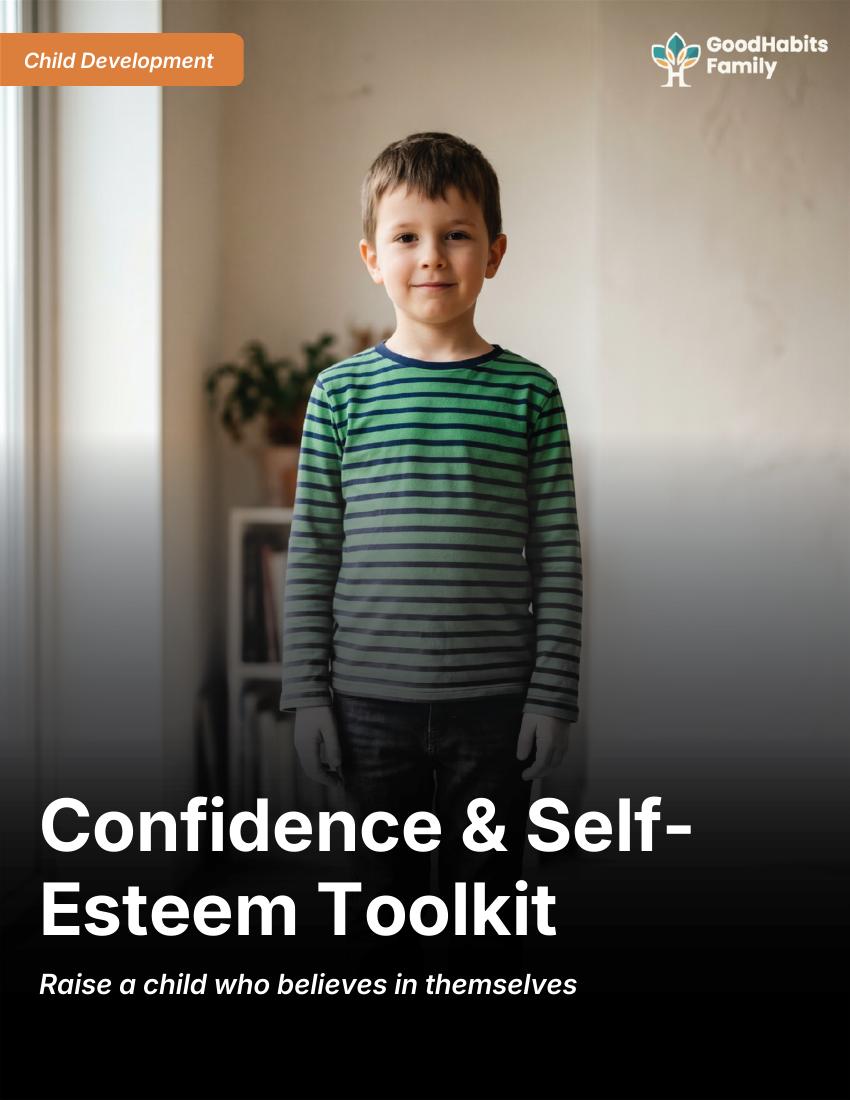
Focus is one half of Child Development. Confidence is the other.
Families who buy this toolkit almost always come back for the Confidence & Self-Esteem Toolkit — because the child who focuses better starts winning small, and needs a parent who knows how to name those wins right.
Bundle price $49.99 · individual price $51.96 · save $1.97 plus a coordinated system
Stay in the loop
One thoughtful email a week.
Practical scripts, calm-down routines, and parenting reframes you can actually use. Unsubscribe any time.
Grab the Free Starter Guide